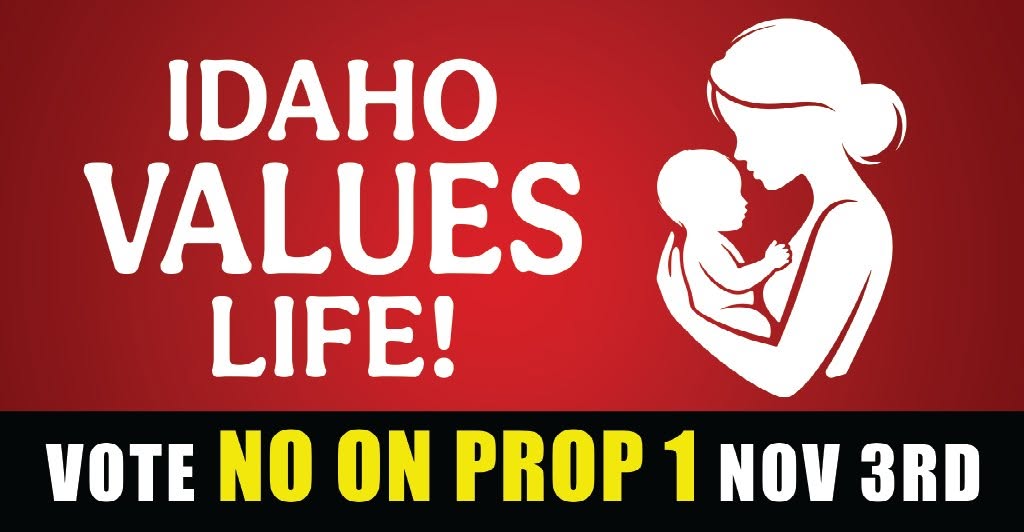
This last week, the Church of Jesus Christ of Latter-day Saints joined the Catholic Church and many Protestant congregations in publicly opposing Proposition 1. Some will suggest that this is inappropriate — that churches shouldn’t address political issues. Others will insist you can’t “legislate morality” at all. Proposition 1 provides a perfect illustration of why the freedom to bring a moral, and even religious, perspective to political questions isn’t a breach of civic norms. It’s fundamental to civilized society.
The Declaration of Independence is itself a moral document, identifying self-evident truth. These truths are the foundation that gave birth to our written Constitution, a separation of powers, our representative process for making law, and our Bill of Rights. Strip out the moral reasoning and the fabric of American freedom disintegrates.
Every law is a moral principle with enforcement power, whether we admit it or not. Prop 1 is no exception. It elevates sexual freedom over personal responsibility, privacy/secrecy over the protection of minors and other vulnerable individuals, liability protection for reproductive health providers over parental rights, and adult preference over the lives of the next generation. The authors of Prop 1 aren’t avoiding a moral argument. They’re making one. The question isn’t whether to legislate morality — it’s which moral values we codify.
I sat in Sunday services this week and heard the letter opposing Proposition 1 read over the pulpit. The chapel was still and quiet during the sacrament except for a toddler singing softly somewhere in the back. Then a baby’s cry of pain erupted, and someone carried them out to the lobby. I sat thinking about how human emotion, human need, and human value have nothing to do with size or developmental age. Little people often express the most intense feelings — the kind bigger people learn to stifle.
Central to Christian doctrine is the belief that every human being, male and female, is created in the image of God, each with a divine nature and destiny. “The Family: A Proclamation to the World” builds directly on that belief: parents have a moral obligation to protect, provide for, and nurture their children, and those who fail that obligation — or who abuse a spouse or child — will stand accountable before God.
That doctrine stands in direct opposition to a worldview that treats sexual freedom and adult preference as the highest value and unwanted children as disposable. That same truth held when my son was born two and a half months early. I remember his tiny hands and feet, and the doctors and nurses who worked tirelessly to save his life, ease his pain, and maximize his potential capabilities.
The same values that protect a child also protect a mother. Idaho code 18-622 is clear on this point: protecting the mother’s life comes first, both in the decision to end a pregnancy and in how that termination is carried out. The baby is protected — but the mother is protected first. That’s also why Idaho law already accounts for miscarriage care, ectopic pregnancies, rape and incest, and medical treatment that may unintentionally harm a pregnancy (Idaho Code 18-604 and 18-622). Much of the opposition to current law is built on the false premise that these protections don’t exist. They do. Idaho’s current law is not the anathema critics claim — it’s a safeguard, since abortion itself carries substantial physical, mental, and emotional risks for women, and unregulated, abortion-on-demand-for-any-reason policy harms women as well as babies.
Here is the real divide on Prop 1: those who believe sexual freedom outweighs every competing interest will support Prop 1; those who believe sexual expression should be secondary to other important moral values — protecting minors, protecting vulnerable adults, protecting parental rights, protecting religious freedom — will vote no.
This divide is the reason religious voices belong in this conversation, not despite their moral claims but because of them. A free society rests on one non-negotiable premise: equal protection under the law for every person, regardless of their status, wealth, intelligence, or usefulness to anyone else. Abortion on demand violates not only the beliefs that unite so many denominations in opposition to it, but also our nation’s founding morality — instead, Prop 1 sits alongside every ideology that has ever decided some lives count less than others.
Thankfully, Idaho doesn’t have to abandon babies to benefit women, nor does it have to walk away from the core moral values it was founded on. Vote no on Proposition 1.